
 By
By 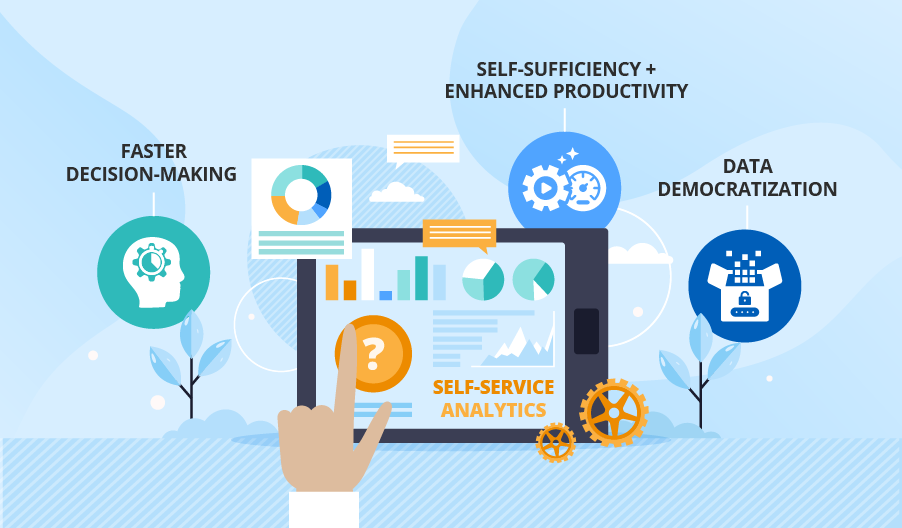
The Shift from Data Dependency to Data Democracy
Imagine a busy airport where only the control tower had access to weather data, flight schedules, and runway status. Every decision — from take-offs to landings — depended on a single team’s call. That’s how many organisations used to operate: only the data analysts had the keys to insights, while the rest waited for reports to be cleared. Self-service analytics has changed that, turning the control tower into a collaborative cockpit where everyone can read the instruments and steer their own flights.
Instead of waiting for analysts to interpret dashboards, non-technical professionals now have direct access to intuitive tools that help them draw insights independently. This democratisation of data marks a significant evolution, bridging the gap between business instinct and analytical validation.
Making Analytics a Language Everyone Can Speak
Self-service analytics transforms data from a specialist dialect into a shared language. With visual dashboards, drag-and-drop interfaces, and natural language queries, even marketing or operations teams can explore performance metrics without writing a single line of code.
A marketing manager can now track campaign performance in real-time, while an HR executive can visualise employee attrition trends instantly. These tasks, once trapped behind IT requests, are now as accessible as sending an email. This inclusive design helps non-technical teams build data confidence, ensuring that decisions are no longer driven by assumptions but by patterns visible to everyone.
In fast-growing business hubs, professionals are upgrading their analytical literacy through programmes like the business analysis course in bangalore, learning to pair intuition with data-backed reasoning. Such learning initiatives equip employees with a dual advantage: business acumen and the power to visualise outcomes independently.
The New Role of the Analyst: From Provider to Enabler
Paradoxically, empowering everyone with analytics doesn’t replace analysts—it elevates them. In traditional setups, analysts spent long hours producing reports for others. Now, their roles have matured into those of data architects, governance leads, and strategic advisors.
By establishing data pipelines, creating reusable models, and ensuring accuracy, analysts free themselves from repetitive requests. They can focus on guiding teams to interpret data correctly, align metrics with business goals, and build predictive systems. Self-service analytics thus transforms the analyst’s contribution from reactive reporting to proactive strategy.
Tools that Bridge the Technical Divide
Modern analytics platforms are designed with empathy for non-technical users. Tools like Tableau, Power BI, and Qlik Sense present insights through visual metaphors — charts, maps, and timelines — that mirror how humans naturally perceive information.
These tools also integrate with CRM, ERP, and marketing systems, offering unified views of operations. For instance, a retail manager can correlate store performance with customer satisfaction scores and seasonal demand in a few clicks. The technical complexity of database queries remains hidden behind clean interfaces, empowering business users to experiment without fear of breaking anything.
Challenges on the Road to True Empowerment
Despite the ease of use, self-service analytics is not a plug-and-play solution. Without proper governance, organisations risk creating data silos or misinterpretations. Consistent training, version control, and standardised data dictionaries are crucial to ensure insights remain accurate and aligned across departments.
The journey also demands a cultural shift — from dependence to accountability. Teams must learn not just how to use tools but how to question and validate results. It’s about fostering curiosity while maintaining data discipline. Leaders play a vital role in promoting this transformation, ensuring that insights lead to meaningful business actions.
The Road Ahead: A Culture of Everyday Analytics
The promise of self-service analytics extends beyond technology; it’s about mindset. When employees at all levels can explore data, identify inefficiencies, and measure outcomes, they become proactive contributors to organisational intelligence. Decision-making shifts from the few to the many, unlocking innovation across every layer.
Forward-looking organisations in India are blending hands-on analytics with structured learning paths such as the business analysis course in bangalore, cultivating professionals who can turn raw numbers into narratives that influence growth. This blend of accessibility and expertise is reshaping how teams collaborate, innovate, and compete.
Conclusion
Self-service analytics is not merely a feature — it’s a philosophy of empowerment. By giving non-technical professionals the tools and confidence to explore data, organisations move closer to true data democracy. The future belongs to workplaces where every individual, irrespective of technical background, contributes to data-driven decisions. When insight becomes everyone’s responsibility, progress becomes inevitable.










Comments